How to spot the BS
My job is to come up with the BS, not to fall for it. Here are the tests I use on awards, "surveys" and glowing stories.
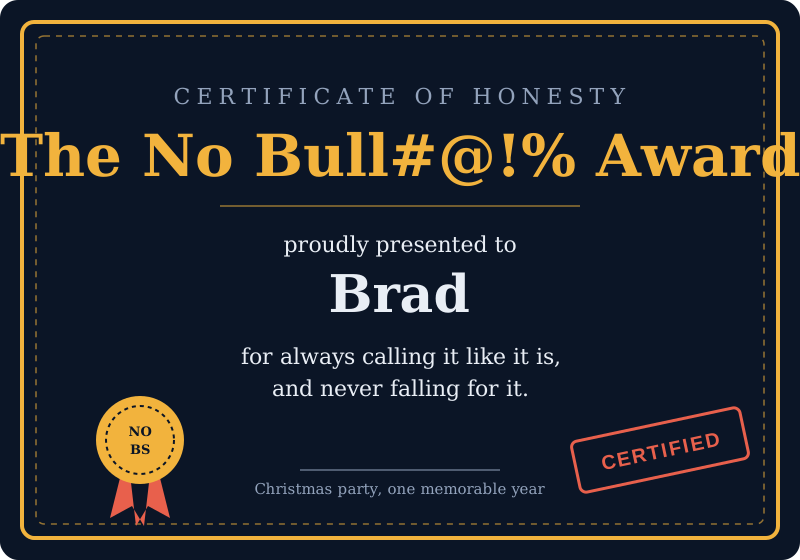
Dad's favourite saying was "It's bull#@!%." He could smell it a mile off. I knew I'd inherited his nose, the classic North Indian shape. I didn't realise I'd also inherited the smell for bull#@!%. In marketing, my job is to come up with the BS, not to fall for it. One year I even won a No Bull#@!% Award, at the Christmas party of an organisation I was working with, for always saying "it's all BS". And yes, I've fallen for it too. That's exactly how I learned to spot it.
I learned from the best
In America I learned sales from the best in the world. Over there, "no" isn't an answer. It's the start of the conversation.
One call from a famous magazine told me I'd been specially selected. Half an hour later I was still on the phone, feeling very special. Right up until the order form.
More recently, someone asked if I'd do a quick survey. Of course I would: it's flattering to be asked. So I told them all my pain points. Then the survey quietly became a sales call, and the answer to every pain point I'd just listed was their product. Clever. In the trade, that's a qualifying call dressed up as research.
The award test
Every year, certain brands release awards. Then every winner shares the news with their own database, and you see the ego blogs: "These people are amazing." It's written like journalism. But the winners are handing over free content and free reach.
The clearest example is in every main street. Walk past the shops and count the stickers from one big review site, all celebrating the same certificate of excellence. Most businesses with decent reviews get one. So it's not really an award. It's that review site's logo, in every shop window, for free.
Here's the test. If they ask you to promote it, you're the marketing. And if there are strings attached, it isn't genuine. The giveaway usually arrives in the second email: "Did you want to advertise?"
Follow the money
A genuine award asks nothing of you, except maybe buying a seat at the dinner. It's usually run by an organisation that exists to serve its members or its community.
If the organiser relies on advertising, the award is part of their business plan. Nothing wrong with that. Just know which one you're in.
What it means for your business
I'm not against awards or media. A genuine award builds trust, and I'd love to win one. But treat the paid kind like any other ad: what does it cost, who sees it, and what comes back? That's your ROI (return on investment), and it applies to your ego too.
And next time a "quick survey" calls, ask one question first: who is paying for this?
If they ask you to promote it, you're the marketing.
Got a pitch, a proposal or an "exclusive opportunity" in your inbox? Paste it into Jargon Johal. He'll tell you what it really says, and the questions to ask back.
Did this help? Leave me a digital tip.
A thumbs up costs you nothing, but it helps others find the good stuff.
Every idea here is mine, sorted with Claude's help. Nothing scraped, nothing auto-generated.